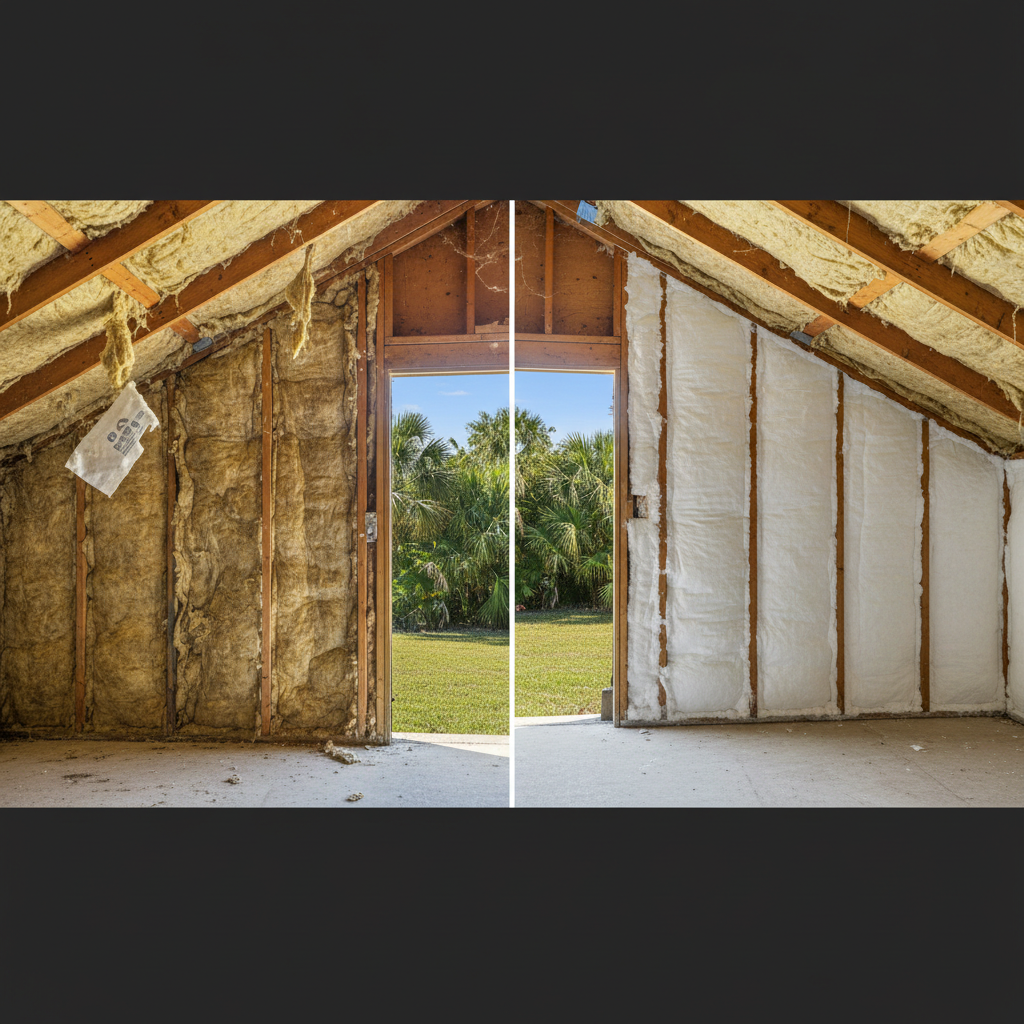
Alright, let's talk about insulating your garage. It's not just about keeping your beer cold out there, though that's a nice bonus. A well-insulated garage can actually make a big difference to your whole house's energy bill, especially here in Dallas where the summers are brutal and the winters can surprise you.
You've got a couple of main routes to go down when it comes to insulating those garage walls and ceilings: spray foam or rigid insulation panels. Both have their place, but for our specific conditions, one usually comes out on top. Let's dig into it.
Rigid Insulation Panels: The DIY-Friendly Option
When I say rigid panels, I'm talking about those big sheets of foam board – usually polystyrene or polyisocyanurate. They're pretty common, and a lot of folks consider them for a DIY project. Here's the rundown:
- Cost: Generally, rigid panels are cheaper upfront, especially if you're doing the installation yourself. You can pick them up at any big box store.
- Installation: This is where they shine for the DIY crowd. You measure, cut with a utility knife, and fit them into the wall cavities. It's not rocket science, but it can be tedious, especially if your studs aren't perfectly spaced or you have a lot of obstructions.
- R-Value: They offer decent R-values per inch. You can get R-3 to R-6 per inch depending on the type and thickness.
- Durability & Maintenance: Once they're in, they're pretty stable. They don't sag or settle. No real maintenance needed.
- Appearance: If you leave them exposed, they don't look great. Most people will cover them with drywall or some other finish.
- Air Sealing: This is the big drawback. You're cutting and fitting these panels, and no matter how careful you are, you're going to have gaps. Those gaps are where air leaks in and out, which kills your insulation's effectiveness. You'll need to seal every joint and edge with tape or caulk, and even then, it's tough to get a perfect seal.
Spray Foam Insulation: The Dallas Heat Fighter
Now, let's talk about spray foam. This is what we specialize in at Efficiency Spray Foam Insulation Dallas, and for good reason. It's a game-changer, especially for places like Dallas where we're fighting extreme temperatures and humidity.
- Cost: It's usually more expensive upfront than rigid panels, mainly because it's a specialized product that requires professional installation. You're paying for the material, the equipment, and the expertise.
- Installation: This is definitely not a DIY job. It requires specific safety gear, mixing equipment, and skill to apply correctly. But once it's sprayed, it expands and cures quickly, forming a seamless barrier.
- R-Value: Spray foam offers a superior R-value per inch, often R-6.5 to R-7 per inch for closed-cell foam. That means you get more insulating power in a thinner layer.
- Durability & Maintenance: It's incredibly durable. Once cured, it's rigid, doesn't settle, and isn't a food source for pests. It'll last the lifetime of your home. No maintenance needed.
- Appearance: It's not meant to be left exposed, though it does look pretty uniform and clean once applied. You'll still want to cover it with drywall or another approved thermal barrier for fire safety.
- Air Sealing: This is where spray foam absolutely crushes rigid panels. When it's sprayed, it expands to fill every crack, crevice, and void. It creates an airtight seal that rigid panels just can't match. This isn't just about insulation; it's about stopping air infiltration, which is a massive source of energy loss. It also acts as a vapor barrier, which is huge for managing humidity in a muggy place like Dallas.
My Recommendation for Dallas Homeowners
Look, if you're on a super tight budget and just want to throw something up there to take the edge off, rigid panels are an option. But for real, long-term comfort and energy savings in a Dallas garage, spray foam insulation is the clear winner.
Think about it: our Dallas clay soil shifts, and so do our houses over time. Those tiny cracks and gaps that develop? Spray foam handles them. The relentless summer heat? Spray foam's superior R-value and air-sealing properties keep that heat out better than anything else. And the humidity? Closed-cell spray foam acts as a vapor barrier, helping to prevent moisture issues that can lead to mold or mildew, especially in a detached garage or one that's not climate-controlled.
You might pay a bit more upfront for spray foam, but you're getting a superior product that performs better, lasts longer, and will save you more on your energy bills in the long run. Plus, you're getting a professional installation that ensures the job is done right the first time. You won't be chasing down air leaks or worrying about your insulation sagging in a few years. It's an investment in your home's comfort and efficiency that truly pays off here in Texas.